Inside the Studio With Karla Way
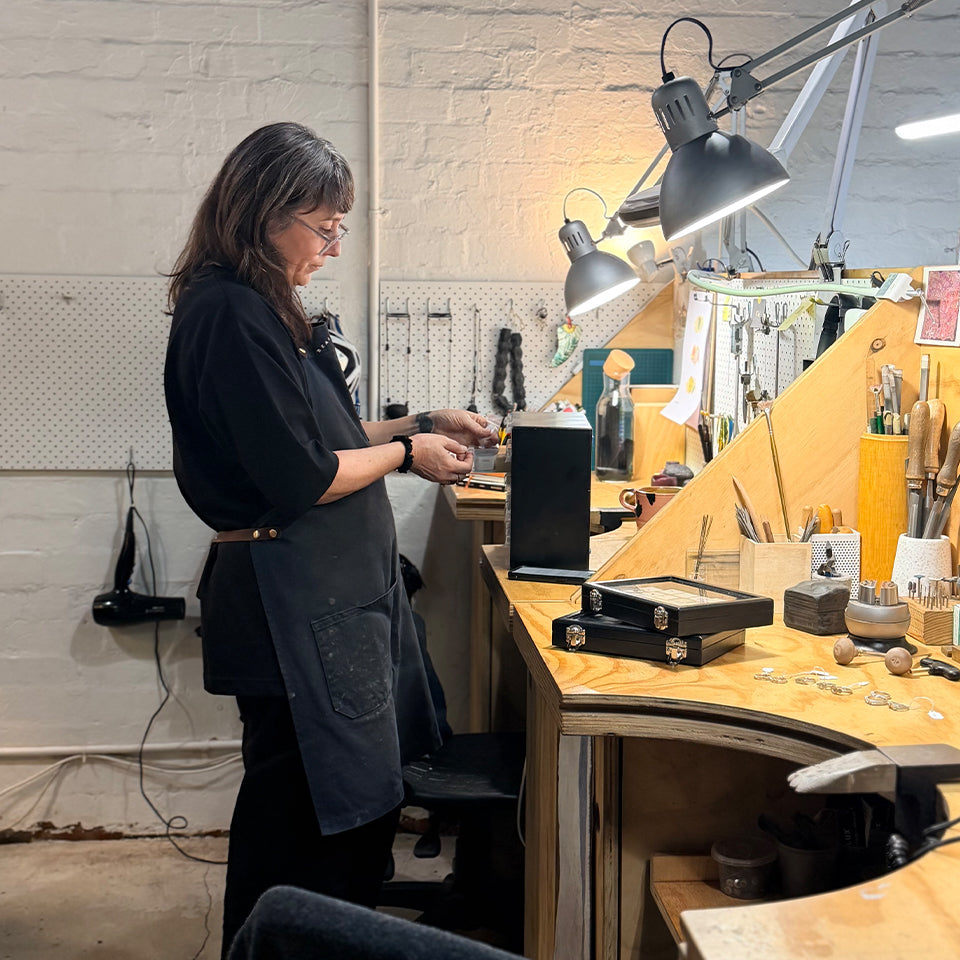
We were honoured to visit the workspace of Melbourne-based contemporary jeweller Karla Way, to explore her vibrant studio and discuss her contemporary jewellery practice.
We asked Karla to share the unseen narratives behind her pieces and the significant tools that ground her daily practice. Read the highlights below or head to our Instagram to watch the full interview.
Thank you, Karla, for welcoming us into your creative sanctuary and sharing insights behind your process.

PO8: Could you share the unseen narrative behind your pieces with our collectors?
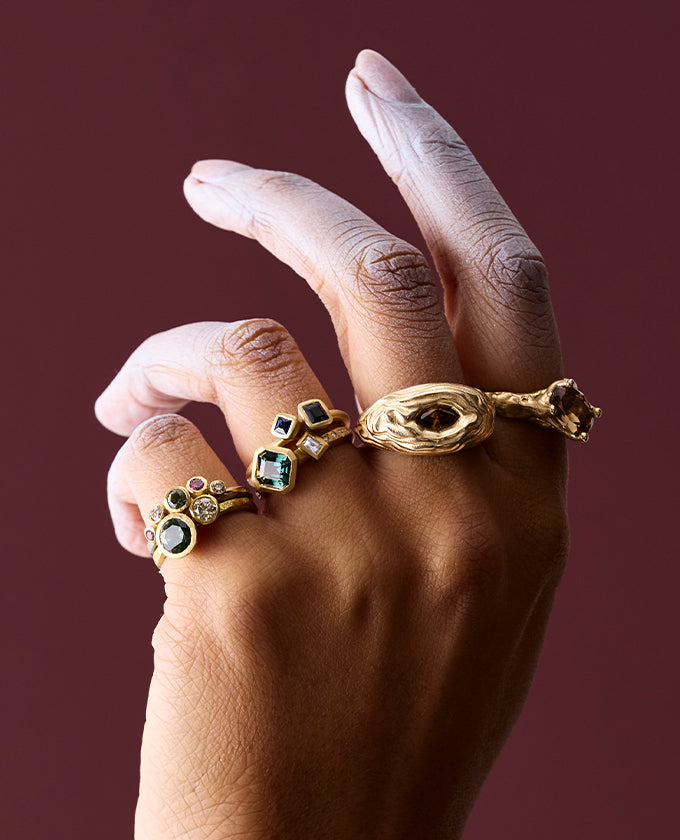
KW: The textures in my pieces are interpretations of those found in nature. There's a real pleasure I take in noticing small things in my environment, and an equal pleasure in the monumental; like landscapes, large trees, rock formations. I'm interested in both, the minutiae and the mega, and my work moves between them, zooming right into the small details of a surface and also pulling back to think about the larger forms they belong to.
Early classification systems fascinate me too, that human urge to organise and categorise the natural world, even when it resists tidy boundaries. So you'll find motifs that hint at and shift between the plant and animal kingdoms, and mostly geological forms and textures of late, that can shift and transmute between mineral and botanical surfaces. That's the language that I, and my hand, keep returning to.

Bench inspirations for Karla (above left) include a piece of meteorite that inspires her textures, along with brass objects she has handmade over the years - a wombat and lizards, plus botanical elements found in nature.
PO8: Can you share a specific tool or object on your bench that holds particular significance for you?
KW: My number one tool is an engraving tool I made for myself while studying Gold and Silversmithing at RMIT. It wasn't intended for this, but I use it almost exclusively for wax carving now, and it's responsible for most of the cleaner, more defined textures in my work. Once a piece is cast in metal, I go back in with other tools to build on that texture further.
The other is a scrappy old hand file I bought from a hardware store when I was just starting out. No handle, a bit beaten up, but it's my go-to for anything ground-texture based. Depending on how I use it, it can read as a rocky surface, a finer fur texture, or the bark of a tree.
These two basic hand driven tools are always what I'm reaching for at the wax bench.
PO8: That type of hand file is what they describe as a 'bastard file' in the trade, isn't it?
KW: Yep, that's what it's called. Charming name aside, it's a beloved versatile tool for shaping and texturing that I can get deep heavy cuts and silky smooth lines with, and it belongs firmly on my bench.

Read more

We're excited to present the work of Siobhan Murphy, the inaugural recipient of the Pieces of Eight Catalyst Award, presented as part of this year's Craft Fresh! Award. The Catalyst Award exists b...

We were privileged to step inside the Melbourne studio of much-loved local contemporary jeweller, Julia Storey. Julia shared her all-encompassing passion for gemstones, and showed us through the c...