

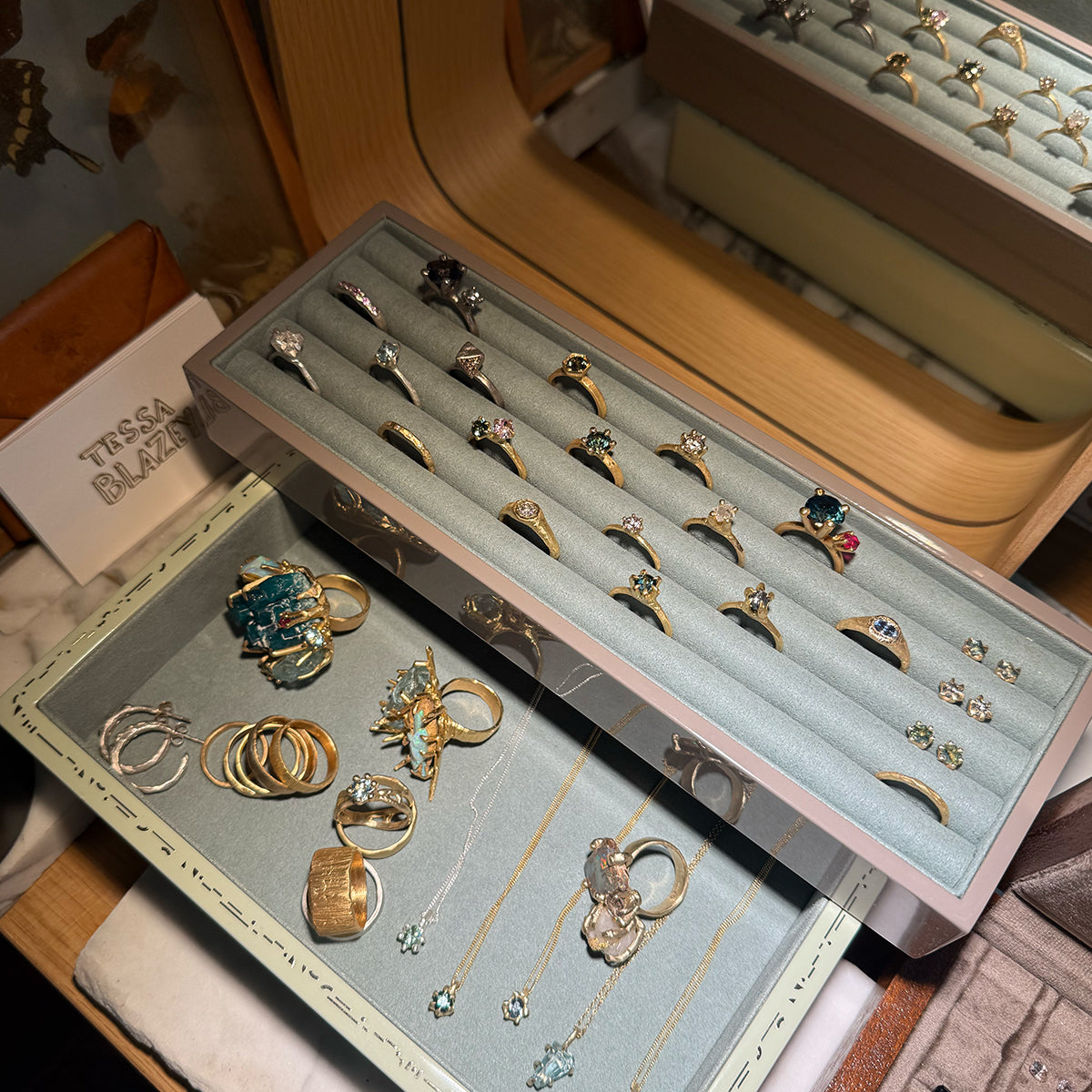
Tessa Blazey: Architecture & Geometry at a Human Scale
When Tessa Blazey creates jewellery, she considers weight, or how something holds itself up — questions she was asking during her studies of sculpture and interiors, years before she ever picked up a jeweller's saw.
It's less a style than a habit of mind — one that has now carried her from a bench in Melbourne to audiences as far away as Munich and New York.
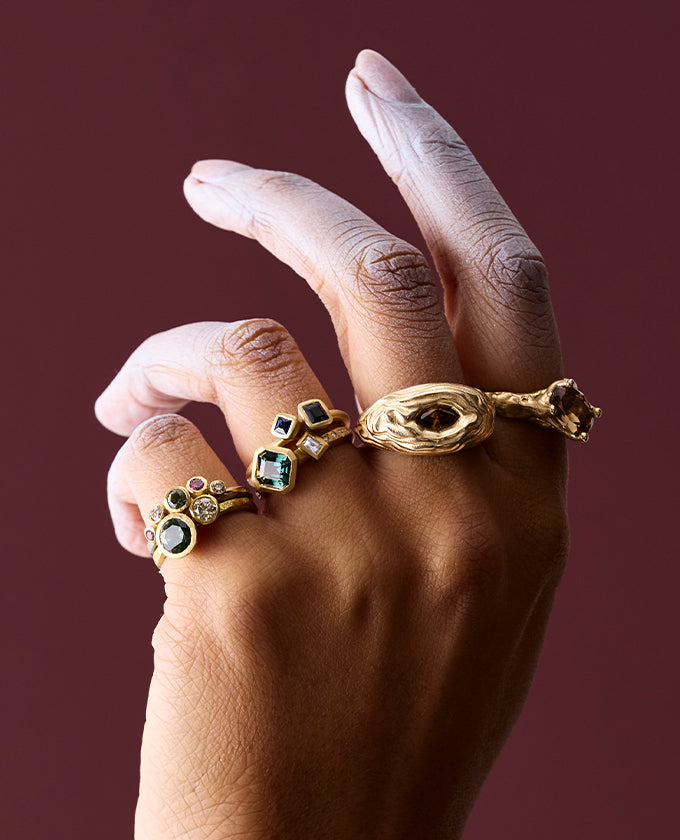
Blazey's jewellery feels like unearthed ancient relics meeting artefacts from a future not yet arrived. We took a morning to visit her Melbourne studio and discuss her work in more detail, exploring past influences and future musings.
PO8: You trained first in sculpture and interior design, then went on to a jewellery engineering diploma. How did those two quite different disciplines end up meeting at the bench?
TB: Sculpture and interior design both taught me to think about form in space, how something occupies volume, how weight and structure work together. Interior design especially gave me an eye for architecture and geometry at a human scale. When I moved into my jewellery studies, I realised I was just working at a much smaller scale, but asking the same questions, how does this structure hold itself up, how does it sit on the body, how does negative space work. The engineering side of the diploma gave me the technical language and precision to actually build the sculptural ideas I already had. So it wasn't really a departure, it was narrowing the same thinking down to something interesting and sculptural you can wear.

PO8: Your pieces carry the names of iconic film characters, like the Mia Wallace ring, Leeloo and Korban, Princess Nausicaä. What is it about these characters that tells you a particular stone or setting belongs to them? How does it inform the creation of the ring?
TB: I usually start with the character and their context. I think about who they are, their temperament and character arc in the film, I also think about the feeling or the mood of the film rather than a literal description. I often choose a film still from a poignant moment in the film as a visual reference point to work from. Sometimes it's the roughness of a stone that feels right, other times it's a colour or a cut that has that same quality or energy the character has. The setting is where I translate that feeling, a fierce character might get a more architectural, angular setting, while someone more romantic or ethereal might get softer, more organic forms. It's an intuitive process, but by the time a piece is finished, the stone and setting together should feel right. They just kind of click into place for me when it's working.
 PO8: People describe your work as simultaneously ancient and futuristic. Please expand on this.
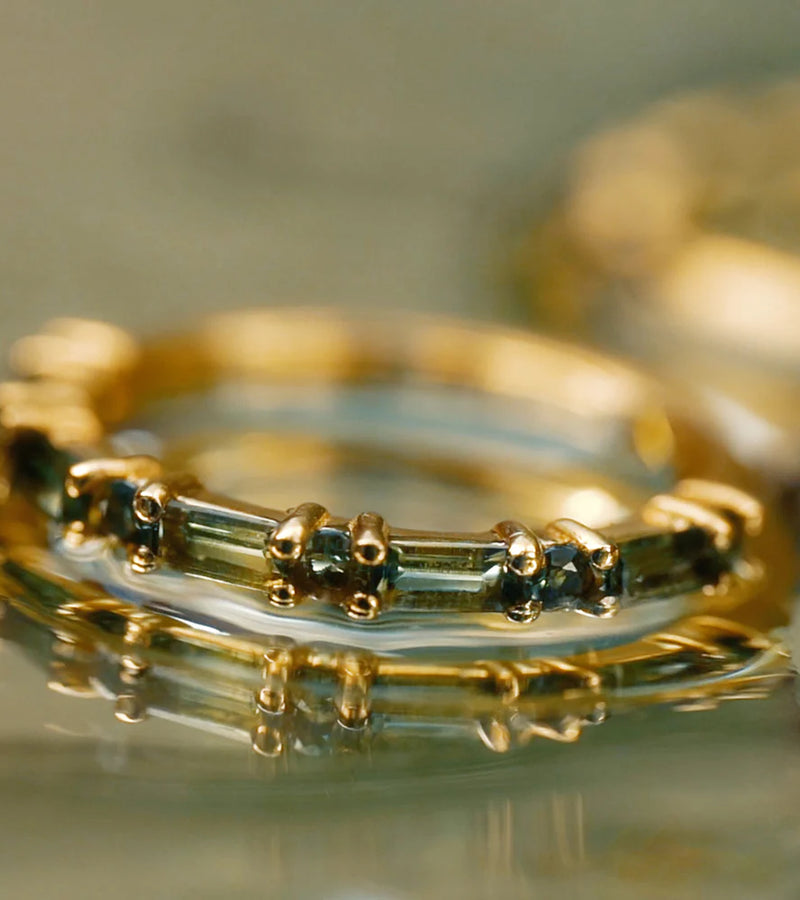
TB: The stones I work with span two extremes, rough, uncut gemstones that carry their raw, ancient origin visibly, and precisely faceted, geometric cuts that feel engineered and modern. I set both within sculptural, architectural forms, letting the setting's structure echo the geometry of the crystal itself. It's a pairing that feels natural rather than contradictory, crystal structures are among the oldest formations in nature, yet their geometric logic is what reads as futuristic to the eye. Ancient and futuristic aren't opposites in my work; they come from the same source.


View more of Tessa Blazey's sculptural collection of rings, pendants and earrings here.
Read more

The jewellery pieces worn on your wedding day tend to outlast almost everything else from it. Book a Bridal Styling session with us to discover jewels that stay with you well beyond the day itself.

Basta. Tutto passa. Malocchio. If you grew up in an Italian household you have heard all three, usually at volume, usually from someone who was not asking your opinion. Anna Marrone hand engraves t...