
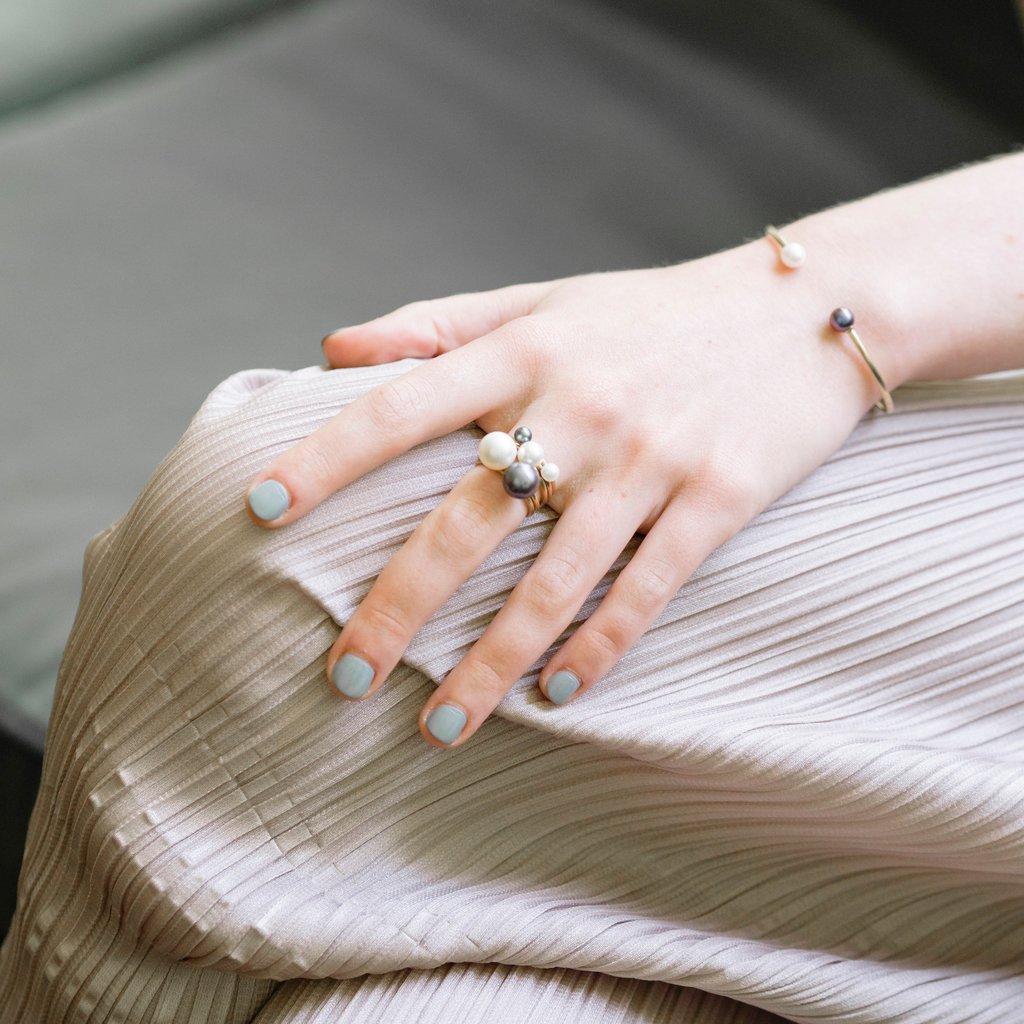
The Journey of a Pearl: From Oyster to Heirloom

Have you ever wondered about the incredible story behind that luminous pearl gracing your necklace or earrings? Far more than just a beautiful gem, each pearl embarks on a fascinating journey, transforming from a tiny irritant within an oyster to a cherished heirloom. At Melanie Katsalidis, we believe understanding this journey deepens your appreciation for these natural wonders. For more, discover our extensive pearl collections today.
The Spark of Creation: How a Pearl Begins
Pearls are unique among gemstones because they are formed by living creatures. It all starts when an irritant—like a tiny parasite, a piece of shell, or even a grain of sand, and lodges itself inside the soft tissue of a mollusk (most commonly an oyster or mussel). As a defence mechanism, the mollusk begins to secrete layers of nacre, a crystalline substance made of calcium carbonate and proteins. These layers build up, one by one, around the irritant, smoothing it over and eventually forming a pearl.
Nature's Palette: Types of Pearls
While the fundamental process is the same, various types of pearls exist, each with its own distinct characteristics and story:
-
Natural Pearls: These are incredibly rare and form without human intervention. Finding a natural pearl is like finding a needle in a haystack, making them exceptionally valuable.
-
Cultured Pearls: The vast majority of pearls you see today are cultured. This means humans initiate the pearl-making process by carefully inserting a tiny bead (or a piece of mantle tissue) into the mollusk. The mollusk then coats this irritant with nacre, just as it would with a natural one. Cultured pearls allow for more consistent quality and availability, these are the pearls in our collections.
Within cultured pearls, you'll find several prominent types:
-
Akoya Pearls: Hailing primarily from Japan and China, Akoya pearls are renowned for their perfectly round shape, sharp lustre, and classic white or cream body colours. They are often associated with traditional pearl necklaces and earrings.
-
Freshwater Pearls: Primarily cultivated in lakes and rivers in China, freshwater pearls offer an incredible array of shapes, sizes, and natural colours. They are known for their affordability and versatility, making them a popular choice for fashion-forward designs.
-
South Sea Pearls: These magnificent pearls are cultivated in the warm waters off the coasts of Australia, Indonesia, and the Philippines. They are the largest and most valuable cultured pearls, known for their impressive size, thick nacre, and luxurious satiny lustre. They come in stunning white, silver, and golden hues.
-
Tahitian Pearls: Often called "black pearls," Tahitian pearls are grown in the lagoons of French Polynesia. While their most famous color is black, they naturally occur in a spectrum of exotic dark shades, including grey, green, blue, and purple, often with mesmerising overtones.
From Harvest to Heirloom: Bringing Pearls to You
Once the pearls have grown to maturity—which can take anywhere from a few months to several years, depending on the type—they are carefully harvested. Skilled artisans then clean, sort, and grade each pearl based on factors like lustre (the intensity of light reflected from the surface), nacre thickness, shape, surface quality, and size. Only the finest pearls make their way to becoming the exquisite pieces you find at Melanie Katsalidis Pearls.
Every pearl tells a story of patience, natural beauty, and meticulous craftsmanship. When you wear a Melanie Katsalidis pearl piece, you're not just wearing a piece of jewellery; you're carrying a piece of the ocean's magic, destined to become a cherished heirloom for generations to come.
Read more

At Melanie Katsalidis, we believe the most cherished jewellery tells a story. We were recently honoured to work on two unique bespoke commissions that perfectly embody this ethos, transforming belo...

A well-curated jewellery collection is far more than an assortment of trinkets; it's a meticulously assembled wardrobe of versatile, meaningful and timeless pieces that eloquently express your pers...