


Betra Fraval for Tidal Wave: Painting Pearls as Objects of Time
Betra Fraval's paintings have long been shaped by the experience of arriving somewhere unfamiliar — the shifting light of Southern France, the density of the Peruvian Amazon, the stark quiet of a Finnish winter — and by the traces those landscapes leave behind.
In this conversation with Pieces of Eight, Betra Fraval brings that same sensibility to a far smaller terrain in her work for Tidal Wave: the surface of a baroque pearl. Working with a translucent, fluid enamel that bleeds and pools into the pearl's natural contours, Betra describes an approach less about imposing an image than entering into dialogue with a material already carrying its own history. What results is a meditation on pearls not as symbols of wealth or purity, but as records of accumulation — objects that, like landscape itself, hold time, memory and transformation within their layers.

PO8: Your paintings are born from the experience of displacement and reorientation in new landscapes. Did working at miniature scale on a pearl feel like arriving somewhere entirely new?
BF: Working with such a beautiful natural material was both exciting and challenging. Part of the pearl's beauty lies in its surface and in the remarkable process through which it is formed. It took some courage to alter that surface, so I approached it with a light touch, wanting to preserve the pearl's natural qualities while making a personal intervention.
I was interested in creating a dialogue between my own mark-making and the pearl's existing history. Much of my practice considers the traces we leave behind and the ways places leave their marks on us in return. Painting the pearl became another way of thinking about those exchanges between material, memory and place.

PO8: A baroque pearl already has its own inner world - iridescence, depth, irregular topography. How did you work with or against that?
BF: I undertook a number of trials to find the right balance between allowing the pearl to speak for itself and introducing my own visual language. Rather than working against its irregular surface, I wanted to work with it.
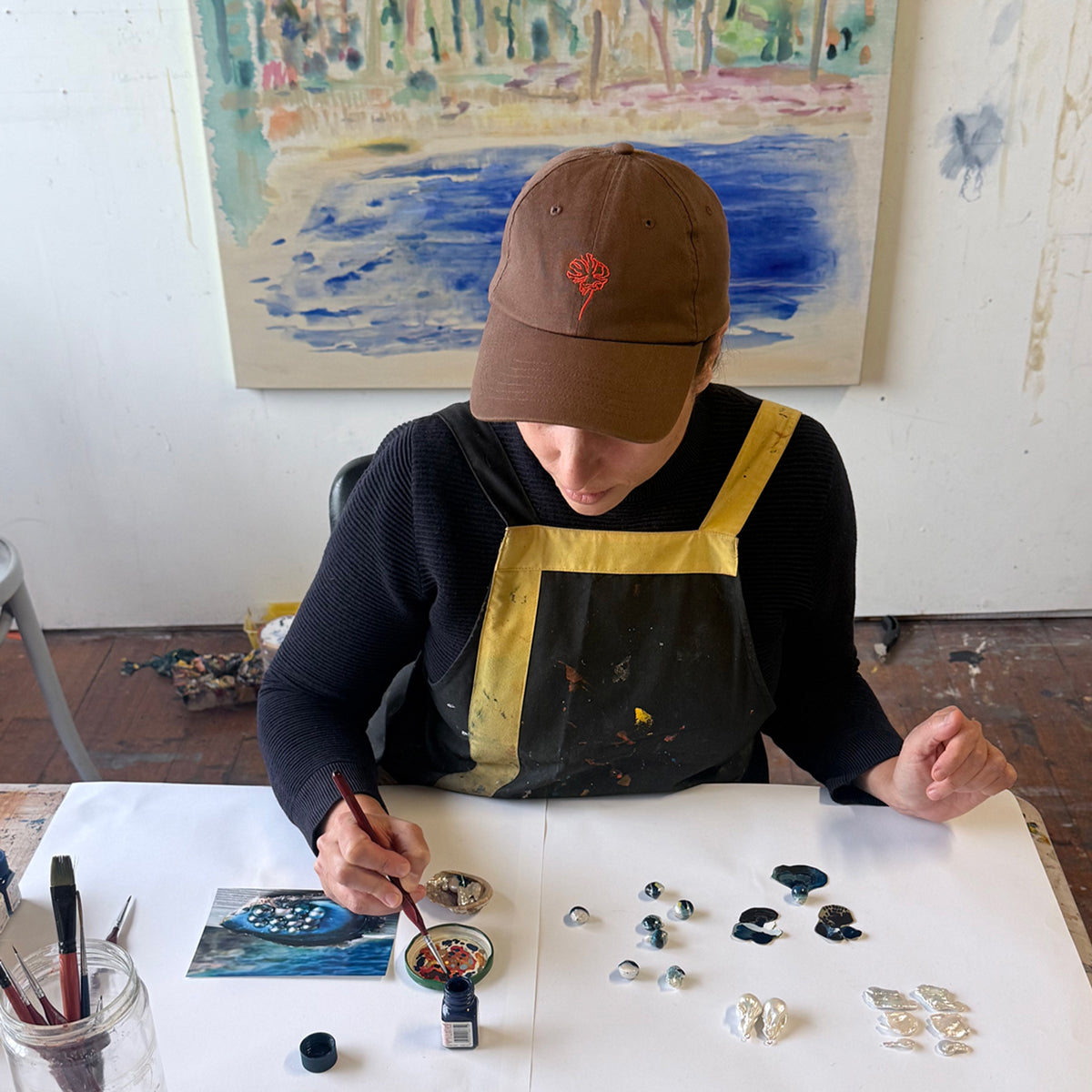
I eventually developed a translucent, fluid application of enamel that could bleed, pool and settle naturally across the pearl. The process felt sympathetic to the pearl's own formation. Instead of imposing an image onto the surface, I allowed the material to respond to the pearl's contours, creating a result that felt both intentional and organic.

PO8: Much of your painting practice is about traversing the gap between what we project onto a place and what we find when we actually arrive. Pearls carry centuries of projected meanings, such as wealth, purity, femininity and the divine. Did any of that projection shape your response?
I have always felt a sense of reverence for pearls and for the extraordinary process through which they come into being. Growing up, pearls were associated with special occasions and a kind of timeless elegance, and I still carry some of those associations with me.
What resonates most strongly, however, is their relationship to time. Pearls are formed gradually through accumulation, layer upon layer, and in that sense they feel closely aligned with my interest in geological processes and shifting landscapes. I think of them less as symbols and more as records of transformation, objects that hold time, experience and material history within their surfaces.

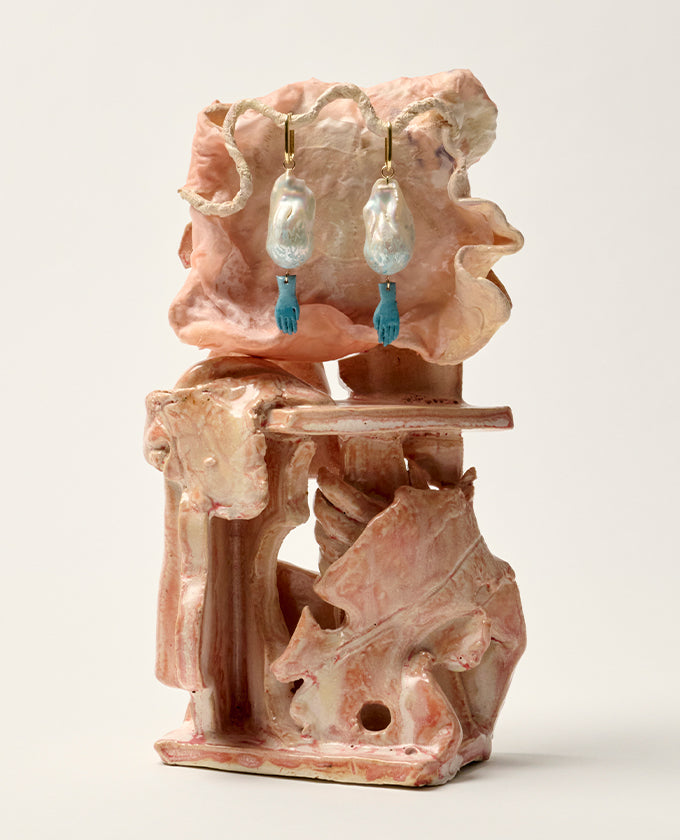
Visit us at 28 Russell Place, Melbourne this August to view Betra's Tidal Watermark earrings and their accompanying sculpture, custom built to display these precious, one-of-a-kind earrings as miniature artworks when they are not being worn.

