
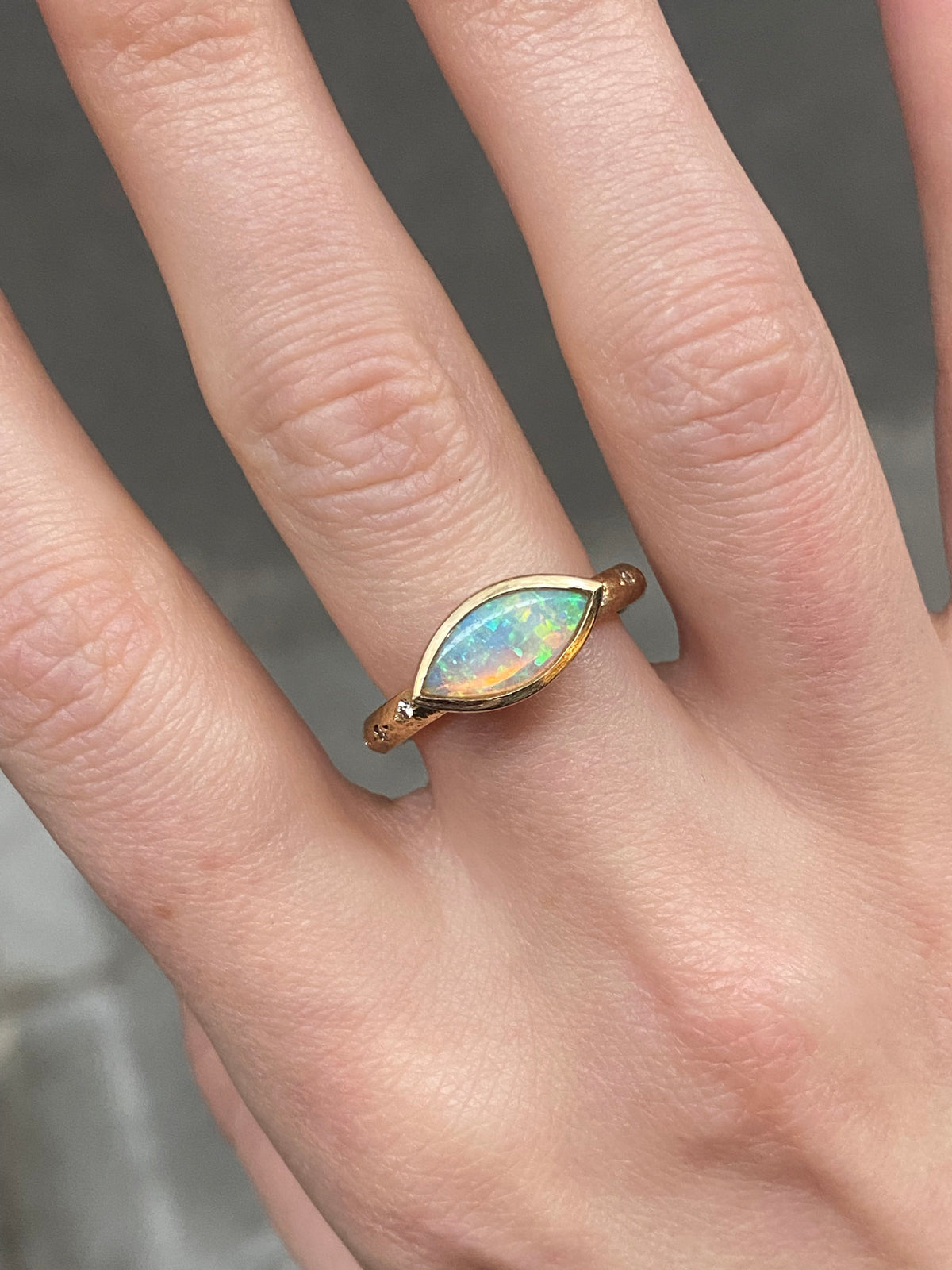
Nothing Lost, Only Rearranged: A Grandmother's Opal, Reset
Most inherited jewellery is kept rather than worn. It sits in a drawer or a box, too significant to alter and too far from its owner's own taste to wear. Maddie's grandmother's ring was one of these: a marquise Australian opal flanked by two small white diamonds, in a white metal setting from another era.
She had always intended to redesign it for her twenty-first birthday. She arrived at the gallery in May with the ring, that intention, and a clear brief — something timeless she could wear every day.
The first decision was what not to change
The opal was the piece; everything else was context. Working with gallery manager Hannah, and jeweller Shimara Carlow, the design turned on a single adjustment most people would not think to ask for: the stone was rotated to the orientation Maddie preferred, so the play of colour sits as she sees it on her own hand.
Nothing was done to the opal itself, and that was deliberate. Australian opal is a soft stone — appreciably softer than a sapphire or a diamond — and recutting or repolishing an inherited one carries a risk we would rather not take when the alternative is simply to turn it a few degrees.
The rebuild
Shimara dismantled the original setting and built it again around the stone. The opal was reset in 14ct yellow gold, held in a clean bezel — a closed rim of metal around the stone's edge, rather than claws. On a stone this soft that choice is protective as much as aesthetic: it shields the edge from the knocks a daily-worn ring inevitably takes, and it sits low enough not to catch.
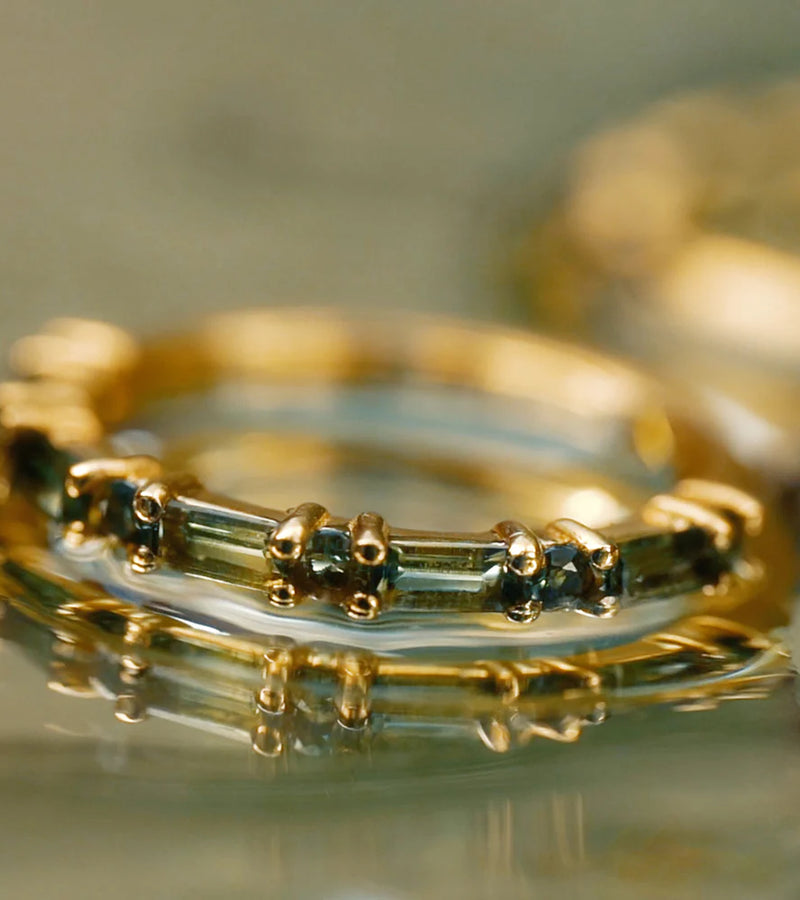
The band was hand-detailed rather than polished smooth, with white diamonds set into it. Nothing from the original piece was lost, only rearranged.
The hesitation
"To be honest, I was nervous — this ring holds so much sentimental value to me. At one point I began second guessing myself, wondering if I was making a mistake by changing it."
That hesitation is the most common part of a redesign, and worth naming. Altering an inherited piece feels like editing someone else's decision. What we have found, across many of these commissions, is close to the opposite: a stone that is worn carries its history further than a stone that is stored away in a drawer.
It is also worth saying plainly that not every heirloom can be reworked. Some stones are chipped or crazed in ways that only show once they are taken out of the setting, and some metals cannot be reused. Occasionally the honest answer is that the original piece is better left as it is, and the right commission is a new one made alongside it. We explain all of this at the consultation phase, before anything is committed.
Collected in July
"When I saw the finished piece for the first time, I was almost in tears. More beautiful than I ever imagined.
You've helped me create something truly meaningful — a piece of history I'll treasure, and one that will be passed down my family for generations to come."
Ten weeks from the first conversation to the finished ring. One stone, turned.
Beginning a redesign
Heirloom redesign and bespoke commissions begin with an unhurried consultation at the gallery, where we look at what you have and talk through what it could become. Bring the piece if you can. We will tell you honestly what can and cannot be done with it, and what it may cost, before you commit to anything. There is no obligation to proceed.
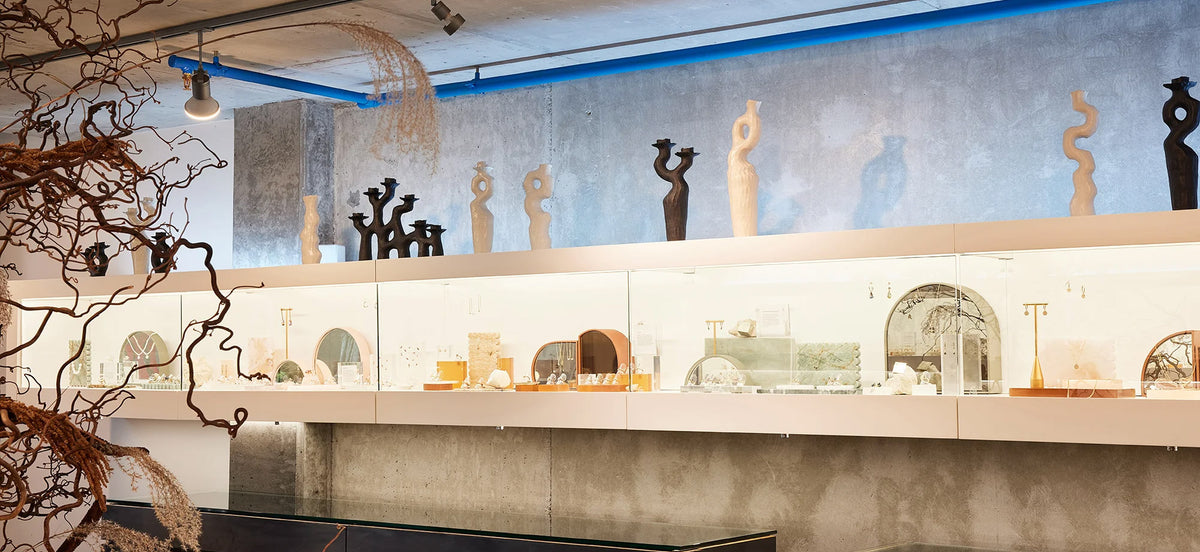
Enquire about a redesign · Pieces of Eight, 28 Russell Place, Melbourne CBD
Read more

Invited to paint on a baroque pearl for Tidal Wave, Troy Emery took the brief somewhere entirely unexpected. Melanie Katsalidis visited his Brunswick studio to see what she had started.

Ahead of the opening of Tidal Wave, our latest exhibition, we spent a morning in the Melbourne studio of contemporary Australian painter, Miranda Skoczek. Surrounded by works in progress, jars of ...